The Human Remains
Against the Artificial

I have seen the accusation twice, maybe more — I’ve stopped counting. Someone, somewhere, read something I wrote and decided it was artificial. Not flawed. Not imprecise. Not even ambitious in a way they disagreed with. Artificial. As if a machine had moved my fingers across the keyboard, as if I were borrowing language rather than inhabiting it.
The first time stung. The second time, I understood: they were naming their own anxiety, not mine.
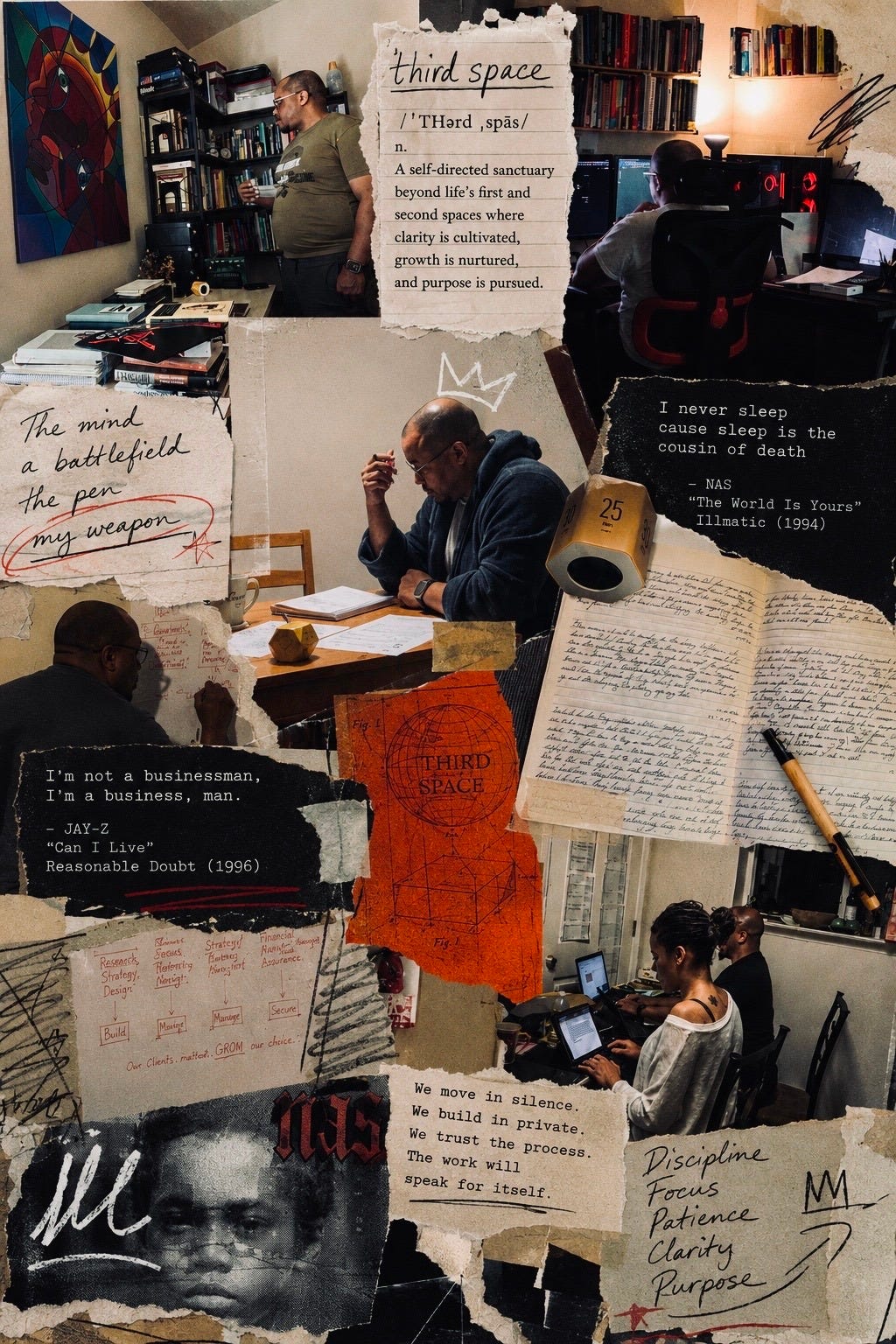
I spent twenty-three years in financial services. I gave that energy — that thinking, that precision, that discipline — to an institution. And then one day, without ceremony, it ended. I didn’t choose the ending. But I chose what came after. I chose to show up here, in public, on the internet, bearing a name that doesn’t hide me well, writing in a register that asks something of the reader. Writing, in other words, as a human thinks — in fragments and circles and moments of discovery.
So when someone calls that artificial, what they’re really saying is: I don’t recognize this kind of thinking. I don’t have a frame for language that does more than one thing at once. And maybe they’re right to feel unsettled. Because the writing I do — the writing I choose to do — doesn’t apologize for itself.
But to understand why I’m not apologizing, you need to understand where I learned to write. The teachers weren’t all in classrooms.
Language has registers. A Baldwin essay reads differently than a text message, and both are correct because they’re doing different work. When I write for Third Space Out, I am not writing for algorithmic consumption. I am writing as a thinking human to thinking humans. That involves risk. It involves the sentence that doesn’t quite land but should be there because it’s honest. It involves the messiness of discovery.
The AI-slop critique mistakes density, variation, and the deliberate use of formal language for inauthenticity. But here’s the irony: real literary writing — the kind Baldwin produced, the kind The New Yorker prints — reads as if it could not possibly be generated. It has signature. It has stakes. It has a human behind it making choices that sometimes contradict each other because that’s what thinking looks like.
And Baldwin did not become Baldwin by accident. Serious writing has never been a solitary magic trick. There were editors, magazines, invitations, refusals, pressures, standards. William Maxwell, the long-serving fiction editor at The New Yorker — associated with the work of Cheever, Salinger, Welty, Nabokov, Updike, and others — once reached toward Baldwin with the kind of seriousness real writers recognize: an invitation to send work, a belief that the voice was worth reading closely. Baldwin’s great work was his own. But the lesson remains: revision is not the process of polishing away the human. It is the process of making the human sharper, truer, more itself.
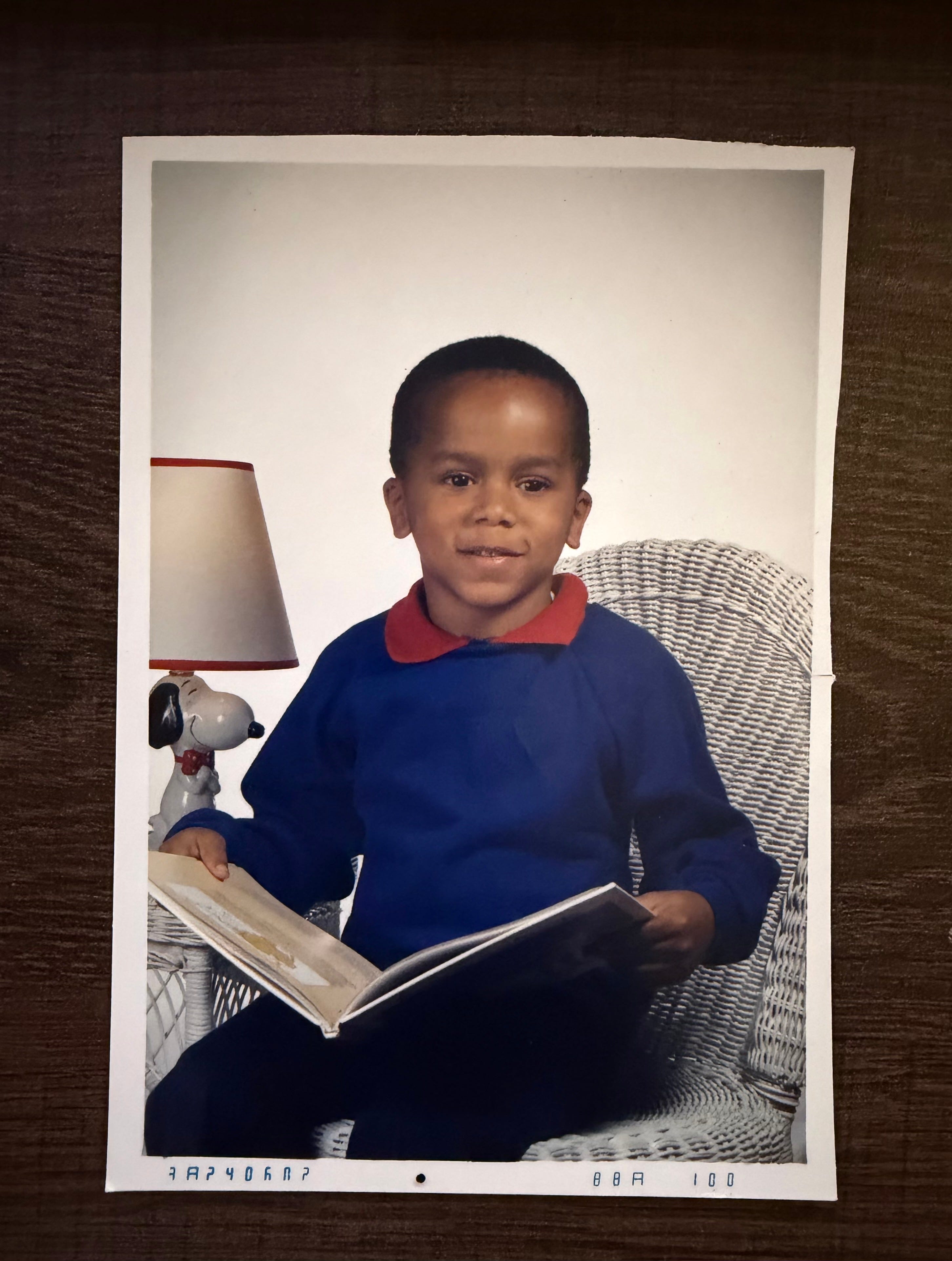
I know this intuitively because I’ve been doing it my whole life. As far back as I can remember, language had me. I was reading by three, talking too much before anyone knew what to do with it, writing love letters by six, and by seven or eight I was already trying to rap — not because I understood craft in any formal sense, but because rhythm and language had found me early. I knew every word of Bobby Brown’s Don’t Be Cruel when it came out. New Edition was not background music to me. Bobby Brown was a hero. I was watching how confidence moved through a body, how a voice could carry style, feeling, timing, defiance.
Later, when hip-hop became my private classroom, I studied it the only way I knew how: rewind, play, rewind, play, rewind, play, write it down. My brother was annoyed. I was apprenticing. By the time Illmatic reached me, I was not discovering language. I was recognizing a more advanced form of the thing I had been chasing since childhood — density, rhythm, compression, image, memory, pain, intelligence under pressure. And that same principle lives in Jay-Z’s work: grief and sacrifice, wit and armor, the fools who think you’ve slipped, compressed into bars that feel like thinking because they are thinking.
So why does formal writing read as suspect? It’s simple: speed and accessibility have flattened what we call writing. A text message is writing. A TikTok caption is writing. A literary essay is writing. But they’re not the same kind of writing, and we’ve stopped teaching people the difference. When everything moves at the pace of consumption, density looks like affectation. Ambition looks like compensation. Language that refuses to simplify reads as trying too hard.
But that’s a category error. Literary writing isn’t trying to be perfect. It’s trying to be true. It’s the deliberate orchestration of language to say something that cannot be said any other way. Sentence fragments. Repetition. The word slightly wrong in a way that’s exactly right. That’s not artificial. That’s human.
And so here I am. I showed up on the internet bearing my name, writing in a register that asks something of you. I chose this after twenty-three years of giving my energy elsewhere. I chose it because this is how I think. This is the register I write in — the literary essay, the New Yorker sentence, the thinking-in-public space where language does more than one thing at once. And I’m not going to apologize for it. Not to the people who mistake density for artificiality. Not to the people waiting for me to slip.
This is who I am. This is where I write.